
In Thai wholesale, the words yi pua and sa pua have been around for generations, but newcomers to the business are often unsure who they refer to. This article explains Thailand's multi-tier distribution structure and the challenges each tier of middlemen faces as trade changes fast.
Who is who in the chain
"Pua" comes from Teochew Chinese and refers to the tier a trader occupies on the route goods travel from producer to consumer:
- Producer / agent (first tier) — the factory or importer, and the large dealers who take goods directly from producers for a defined territory.
- Yi pua (second tier) — large wholesalers who buy in bulk from agents or factories and distribute onward to smaller traders; they usually run their own warehouses and serve hundreds of store accounts; thin per-unit margin carried by volume.
- Sa pua (third tier) — smaller wholesalers who take goods from yi pua and distribute to corner stores in their own area, often delivering by van sales; their edge is knowing local shops and reaching the storefront.
- Retailers / corner stores — the last stop before the consumer; order small but often.
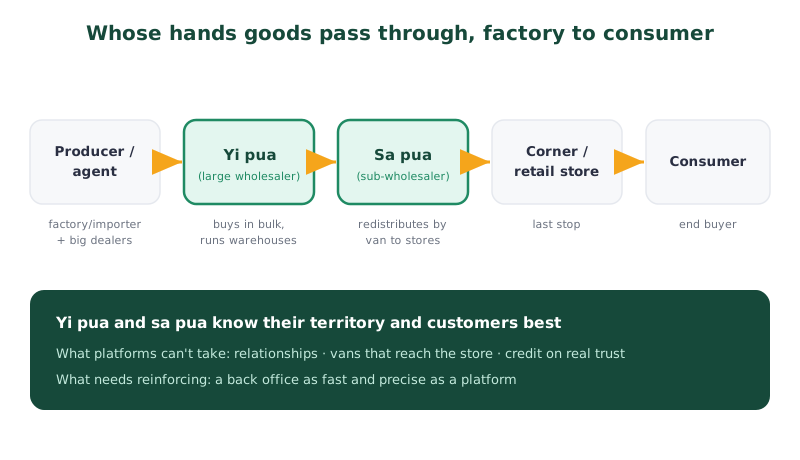
This tiered structure is why Thai goods reach small shops in every subdistrict — each tier knows its territory and customers better than anyone.
The challenges facing yi pua and sa pua today
Middlemen are now squeezed from both sides: big brands sell directly to stores through their own apps, while corner stores can order from online platforms themselves. Survivors must compete on speed and cost — which clashes with the old way of working:
- Warehouse and on-van stock never matches the books; checking means walking and counting.
- Each store gets a different price, kept in a notebook or one salesperson's head.
- Credit extended to many stores, with balances scattered across paper bills and collections falling behind.
- Orders arrive via LINE and phone, re-keyed every morning with regular omissions.
The well-run middleman is the one still needed
The strengths platforms can't take are relationships with local stores, vans that reach the storefront, and credit extended on real familiarity. What needs reinforcing is a back office as fast as a platform — stock genuinely visible across every warehouse and van, each store's price and balance retrievable instantly, and orders flowing into one system with no re-keying. That is exactly the work a Distribution Management System (DMS) is designed to answer — see how it applies to consumer goods in our consumer-goods solution.
If you're a middleman, where to start reinforcing the back office (you can do this tomorrow)
No need to wait for a big system — plug the slow, leaky spots first:
- Bring warehouse and on-van stock into one view — drop the separate notebooks, merge into one file first, so you can check stock without walking and counting.
- Make a per-store price register a rule, not something in one salesperson's head — swap the driver and prices won't drift.
- Track each store's balance and how long it's been owed before extending new credit.
- Funnel order channels (LINE/phone) into one place to cut morning re-keying and dropped orders.
Summary
Yi pua are the large wholesalers who buy from producers or agents; sa pua are the smaller wholesalers who distribute onward to local corner stores. This structure is still the backbone of Thai distribution — but today's middlemen must run a back office as fast and precise as a platform to keep their territorial and relationship advantages. Start tomorrow by bringing stock, prices and balances into one place, then build up to a full system.