
If you run a wholesale or distribution business, you've seen pickups or vans loaded with goods driving store to store — selling, collecting payment and delivering all in one trip. That's van sales (also called a cash van). This article explains what van sales is, how it differs from order-taking, which businesses it suits, why controlling on-van stock is the biggest headache, and how to start fixing it tomorrow.
What is van sales?
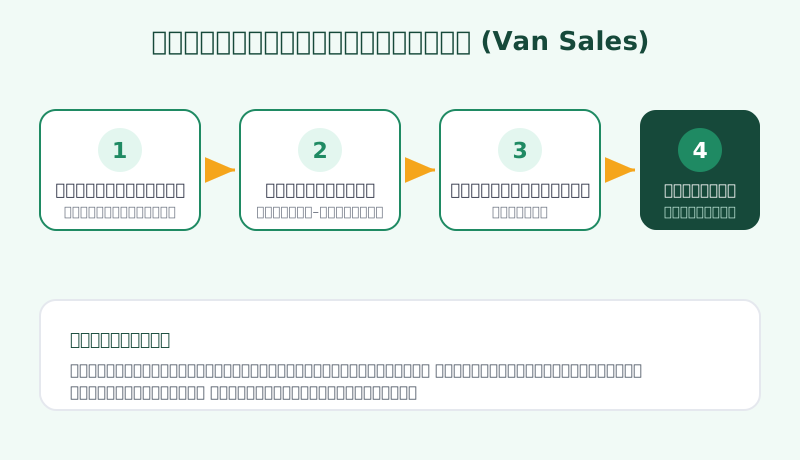
Van sales is a model where the salesperson carries goods on the van and sells directly at the storefront. When the customer agrees, the rep issues the bill, hands over the goods and collects payment (or records credit) — completing every step in one place — unlike ordering ahead and waiting for a later delivery. In distribution, it's known as a "cash van."
It's popular because customers get goods immediately with no wait, the seller closes fast, and — crucially for the owner — cash comes back quickly, turning over each day. It suits consumer goods, beverages, snacks and everyday items that small shops restock often.
How van sales differs from pre-sales
Another common model is pre-sales (order-taking): the rep visits the store, takes the order first, then the warehouse picks and delivers later. Three differences matter:
- Where the goods are — van sales: on the van, sold from what you carry · pre-sales: at the warehouse, sold from a catalog then picked.
- When you collect — van sales: collected on-site in one trip · pre-sales: billed and collected later on credit terms.
- What you must control — van sales: stock "on each van," outside the warehouse all day · pre-sales: mainly the central warehouse and the pick queue.
Which businesses should use van sales?
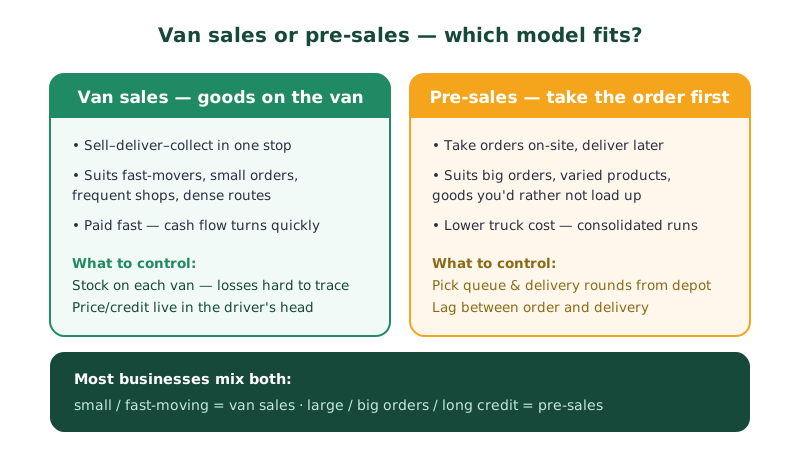
There's no single answer that van sales beats pre-sales or vice versa — it depends on your work. Weigh these four axes and see which way it tilts:
- Product profile — fast-moving, low unit price, not too many live SKUs → van sales pays off because you can carry the full range. Highly varied or large/expensive items aren't worth carrying → pre-sales fits better.
- Order size and frequency — stores ordering small but often (corner shops restocking weekly) → van sales finishes faster; stores ordering big lots occasionally → pre-sales with consolidated delivery is cheaper.
- Route density — shops clustered together, many per day → van sales is fuel-efficient; shops spread far apart, delivering a few cases each → cost eats the margin.
- Cash flow and credit — want cash fast → van sales collects on-site; large customers you already extend long credit to → pre-sales billing on terms matches the work.
In reality many businesses mix both — small fast-moving customers via van sales, large heavy-order customers via pre-sales — to fit cost and service to each group. (To segment customers more finely, read how to segment wholesale customers.)
Common van sales problems (and why they happen)
Van sales is fast and self-contained, but the trade-off is that stock sits across many vans, outside the warehouse all day, making it hard to control. The recurring problems share one root — on-van goods aren't recorded against reality:
- Untraceable losses — a few cases lost per trip looks minor, but across every van for a month it's profit quietly gone, with no load/return record to trace where.
- End-of-day mismatch — leftovers don't match the bills sold, forcing a van-by-van reconciliation every evening; drivers get back late, admins stay late.
- Can't answer customers — you don't know what each van has left, so you can't promise when a customer calls — or you promise and the stock isn't there.
- Re-keying errors — bills on paper get re-entered later with omissions; price and balances held in the driver's head drift when you swap drivers.
Where to start (you can do this tomorrow)
No big system needed to start plugging the leaks — just simple discipline on what you have:
- Count stock at loading every morning, recorded as a per-van starting number, not eyeballed — you need a starting figure to reconcile against.
- Reconcile 3 numbers per van at day's end: loaded − sold by bill − returned should be zero; any van that isn't has a leak, visible that day, not at month-end.
- Put a per-segment price sheet on one page in the van, so price doesn't depend on the driver's memory.
- Send the driver out with each store's outstanding balance, so before extending new credit they see the old balance.
- Review which van/route isn't worth it — low sales but long distance — and re-plan the route.
How a system controls van sales
As vans and stores multiply, hand-counting won't scale. The sustainable fix is making "on-van goods" stock the system sees and genuinely deducts. With a distribution management system (DMS) that supports van sales, you get:
- Loading the van deducts from the central warehouse instantly, with each van's stock tracked separately, so you know exactly what each holds.
- Reps bill from a phone on-site, working offline with no signal and syncing later, with per-segment pricing and balance checks pulled automatically before billing.
- Leftover stock returns to the warehouse and the system reconciles loaded − sold − returned automatically; a short van shows that day.
- See in real time what each van has sold, what's left, and which route earns or loses.
Summary
Van sales is selling from a van where goods are on board and the sale completes in one place — suiting fast-moving goods, small orders, frequent shops and businesses that want cash fast, while pre-sales suits large orders and long credit; most mix both by customer group. The thing to watch is controlling stock on each van. Start tomorrow by counting at loading and reconciling three numbers at day's end, then let a system make it precise across every van. If you're choosing a system, continue with what a cash van system should include.